Few things are more frustrating than turning on your A/C and getting warm or weak air on a hot day. When that happens, the big question becomes: can you handle it yourself, or is it time to let a technician dig in? Some small A/C tasks are reasonable for a handy driver, but other jobs can get expensive or even dangerous if they are guessed at.
Why A/C Problems Deserve a Little Respect
Your A/C system is more than a simple fan with cold air behind it. It runs under high pressure, relies on specific refrigerant amounts, and uses sensors and electronics to keep everything in balance. When something is off, the system might still cool a little, but internal parts can already be under extra strain.
That is why treating every A/C issue like a quick “top off and go” can backfire. Misdiagnosed problems often lead to repeated failures, wasted money on parts, and, in the worst cases, damage to the compressor and other major components.
Easy Checks Most Drivers Can Safely Do
Before you assume the A/C itself is failing, there are a few simple checks you can do at home. These do not involve opening the refrigerant system or special tools, just a bit of attention.
You can verify that the A/C button lights up and the blower fan changes speeds correctly. You can listen for the engine speed to dip slightly or hear a soft click under the hood when the A/C is switched on. Checking that all vents are open, not blocked by objects, and that the recirculate setting is being used correctly can solve a few “weak A/C” complaints right away.
A quick look through the front grille to see if the condenser is packed with leaves, dirt, or bugs is useful as well. Light debris can sometimes be gently rinsed away to restore airflow.
DIY Tasks That Are Usually Reasonable
There are a few basic maintenance items that many owners can tackle without getting in too deep. Replacing the cabin air filter is a good example. A clogged filter can seriously cut airflow and make a healthy A/C system feel weak. On a lot of vehicles, the filter is accessible behind the glove box with only simple tools.
Cleaning the area at the base of the windshield so leaves and junk do not clog the cowl or drains is another easy job. Keeping interior surfaces and floor mats relatively clean also helps reduce dust and odors that end up in the vents. Simple habits like airing out a very hot car for a minute before relying on the A/C are well within the DIY category.
Jobs That Should Be Left to a Professional
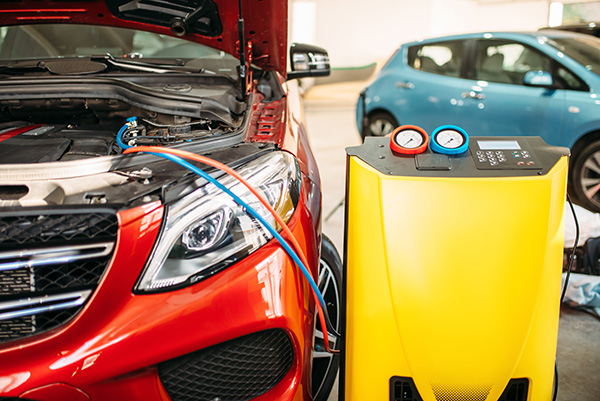
Once you move past filters and basic airflow checks, the risk level goes up quickly. Anything involving refrigerant, pressures, or opening the system is best handled by someone with proper equipment and knowledge. Recovering, evacuating, and recharging refrigerant have to be done with the correct machines, and the system is designed for a very specific amount of charge.
Electrical diagnostics for A/C controls, pressure sensors, and fan circuits are another area where guessing gets expensive. Chasing intermittent cooling problems or warning lights by swapping parts is a good way to spend more than you need to. When we diagnose A/C issues, we rely on pressure readings, scan tool data, and wiring tests instead of trial and error.
Why Over-the-Counter Recharge Cans Are Risky
Those small recharge cans at the parts store look like an easy fix, but they come with real downsides. They encourage adding refrigerant without ever knowing how much is already in the system. Too little charge will not cool well; too much can raise pressures, strain the compressor, and still not solve the problem.
Many of those cans also include sealers. Those products can thicken and plug small passages in the condenser, expansion device, or service equipment. In the long run, that can make a simple leak harder and more expensive to repair. We have seen systems and shop machines damaged by a sealer that was meant to be a shortcut.
How a Professional A/C Inspection Protects Your Wallet
A proper A/C inspection focuses on finding the cause, not just treating the symptom. That usually starts with checking vent temperatures, watching how the compressor engages, and measuring high and low side pressures. From there, a technician can look for dye or oil traces that show leaks, confirm that fans and blend doors are doing their job, and verify that the system has the correct charge.
The goal is to repair what is actually wrong on the first visit. That might be a small leak at a fitting, a weak fan, a failing pressure switch, or a compressor that really is worn out. When the diagnosis is solid, you avoid stacking multiple “maybe this will fix it” repairs on top of each other.
Get A/C Service in Marietta, GA with KLM Auto Center
If your A/C is blowing warm, cycling strangely, or just not cooling as it used to, you do not have to guess where the problem is. We can sort out what makes sense for DIY and where professional tools are needed, then handle the testing and repairs that get cold air back reliably.
Schedule A/C service in Marietta, GA with KLM Auto Center, and we will help you stay comfortable without turning your A/C into an experiment.