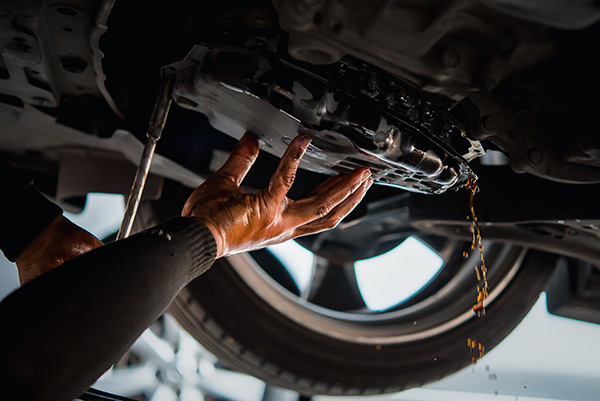
Transmission fluid has a harder life than most drivers realize. It does not just sit in the transmission like colored oil in a container. It deals with heat, friction, pressure, clutch material, metal particles, torque converter load, and thousands of shifts over years of driving.
When the fluid is fresh and correct for the vehicle, it helps the transmission shift cleanly and protect internal parts. When it gets old, overheated, contaminated, or low, the transmission can start wearing in ways the driver may not feel right away. By the time slipping, harsh shifts, or delayed engagement become obvious, the fluid may have already stopped doing its job for a while.
Transmission Fluid Has Several Jobs At Once
Automatic transmission fluid has to lubricate bearings, bushings, gears, and shafts. It also helps cool the transmission, clean internal parts, protect seals, and apply hydraulic pressure to clutches and bands. In many transmissions, the fluid also affects how shifts feel.
That is why transmission fluid condition is so important. It is not there only to reduce friction. It is part of how the transmission operates. If the fluid breaks down, the transmission may still move the vehicle, but internal parts may be working harder than they should.
Manual transmissions, dual-clutch units, CVTs, and transfer cases all have their own fluid needs too. The correct fluid type matters because each design depends on specific friction behavior, viscosity, and additives.
Heat Is The Biggest Enemy
Heat is one of the main reasons transmission fluid breaks down. Normal driving creates heat, but towing, hills, stop-and-go traffic, heavy loads, low fluid level, cooling problems, and aggressive driving can make the transmission run hotter.
As fluid overheats, it can darken, smell burnt, and lose its ability to protect parts. The additives that help control friction and wear start to break down. Once that happens, the transmission may shift harder, slip, hesitate, or feel inconsistent.
Burnt fluid is a warning sign. It usually means the transmission has been exposed to heat that deserves attention. Simply adding fluid will not undo heat damage inside the system.
Old Fluid Carries Wear Material
Some wear inside a transmission is normal. Clutches wear slightly, gears and bearings create fine metal particles, and seals age. Healthy fluid helps carry that material to the filter or pan magnet where it belongs.
As the fluid gets older, it can become loaded with debris. That material may continue circulating through small passages, valves, solenoids, and clutch areas. Modern transmissions have very small hydraulic passages, and dirty fluid can make those parts less responsive.
A clogged filter or restricted screen can reduce fluid flow. Low flow means less cooling and less pressure. That is when a minor fluid condition can start to turn into a shifting problem.
Shifting Problems Can Start Subtly
Transmission wear does not always announce itself with a loud bang. Often, the first signs are small enough that drivers adapt to them.
The vehicle may take an extra moment to move after shifting into drive or reverse. A shift may feel firmer than usual. The engine may rev slightly before the transmission catches. The car may bump into gear after a stop. On the highway, it may hunt between gears or feel less direct than it used to.
These changes are worth checking early. A service may help if the fluid is simply old and the transmission is still healthy. If internal damage has already started, waiting longer usually leaves fewer good options.
Why Low Fluid Is So Harmful
Low transmission fluid can be even more damaging than old fluid. If the transmission does not have enough fluid, it may not build sufficient pressure or cool properly. Air can mix into the fluid, pressure can drop, and clutch packs can slip.
Slipping creates more heat. More heat breaks the fluid down faster. That cycle can quickly damage internal parts.
Low fluid usually means there is a reason. A leak from a cooler line, pan gasket, axle seal, input seal, or transmission case should be found instead of topping off the fluid and moving on. A proper inspection can determine whether the transmission is leaking and how serious the leak is.
Signs Transmission Fluid Needs Attention
Transmission fluid problems can show up in several ways. Each symptom gives a different clue about what the fluid and transmission may be doing.
- Delayed engagement into drive or reverse can happen when fluid pressure is low, the fluid is old, or internal seals and clutch circuits are struggling to apply correctly.
- Harsh or clunky shifts can point toward fluid breakdown, valve body issues, mount problems, software concerns, or internal wear, so the whole pattern needs to be checked.
- Slipping under acceleration is more serious because the engine speed rises without the vehicle accelerating as it should. That can create heat fast.
- Dark or burnt-smelling fluid suggests the fluid has been overheated and may no longer be protecting the transmission the way it was designed to.
- Fluid leaks under the vehicle should be addressed early, as a small leak can lead to low fluid levels and pressure problems.
- Shuddering during light acceleration can sometimes be caused by torque converter clutch problems, fluid condition, or other drivetrain issues.
These symptoms do not all mean the transmission is ruined. They do mean it should be tested before more miles are added.
Why Fluid Service Timing Matters
Transmission fluid service is most useful before the transmission is already badly worn. If the fluid is old but the transmission is still working properly, replacing it with the correct fluid can help protect the system. If the transmission is already slipping badly, fluid service may not solve the internal damage.
That is why service history matters. Waiting until the transmission acts up is not the best plan. Regular maintenance gives the fluid a chance to do its job before heat and debris take over.
The correct service also depends on the vehicle. Some transmissions need a drain and fill. Others require a filter, pan service, a specific fill temperature, a scan tool procedure, or an exact fluid specification. Using the wrong fluid can create new shifting problems.
Get Transmission Fluid Service In Marietta, GA, With KLM Auto Center
If your transmission fluid is old, dark, burnt-smelling, leaking, or you are noticing delayed, harsh, slipping, or shuddering shifts, KLM Auto Center in Marietta, GA, can check the fluid and transmission operation.
For transmission fluid service before the old fluid causes expensive wear, contact us to schedule an appointment.